 EN
EN
 RU
RU

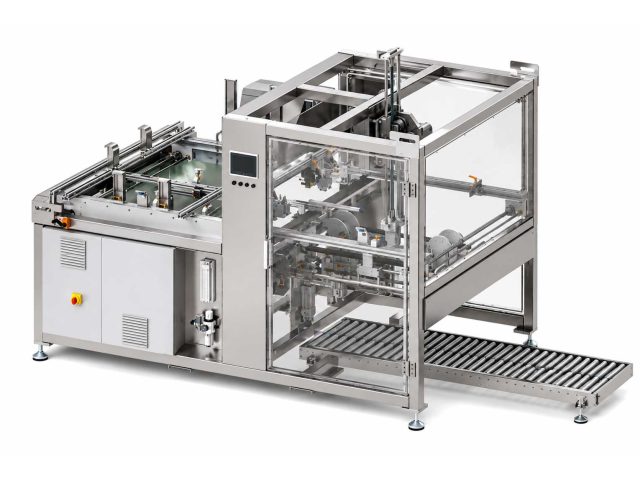
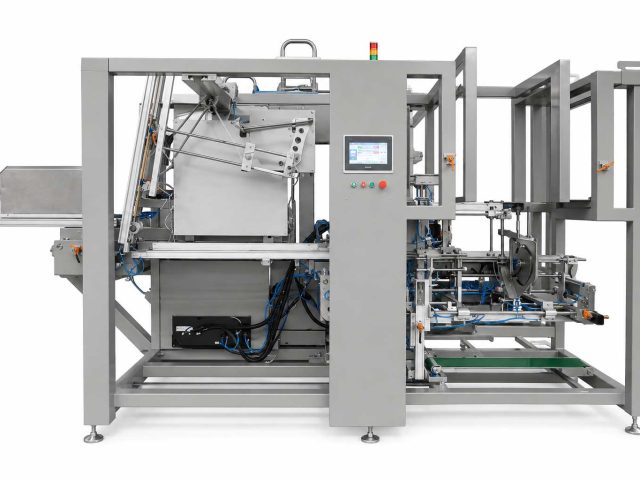
Battery Sorting, Honeycomb Tray Forming and Case Packing Line
Three product families and six SKUs: 550 ppm battery infeed through honeycomb tray insertion, telescopic box forming, cartoning and a combined case opening and packing unit.
Client Background
Challenges
Three product families that share almost no geometry
The three battery categories differ in cell diameter, cell length and count per pack. Integrating them into one line was the central engineering difficulty of the project, and it drove the recipe structure rather than a mechanical compromise between them.
Honeycomb separator forming and insertion
The honeycomb tray has to be formed, filled with cells and presented to the cartoner without any cell escaping its pocket. A separator that is inserted out of position defeats its purpose, so insertion is a controlled step rather than a push.
Telescopic box forming with a separate lid and base
A two-piece box needs two blank feeds that must be registered to each other before the lid is placed. Misregistration between lid and base is immediately visible to the consumer, so alignment is monitored in line.
One 550 ppm flow feeding four downstream steps
Sorting, tray forming, box forming and case packing all draw from the same battery flow. Any imbalance between them starves the line, so buffers and interlocks are sized to that infeed rate rather than to average demand.
How ZRAY Solves It
Project Results
Project Timeline
-
01
Family and pack study
The three battery families, the honeycomb requirement and the telescopic box construction reviewed together before the line concept was fixed.
-
02
Module design and build
Five modules engineered as one line, with the recipe structure defined for all six SKUs.
-
03
Factory run and FAT
Full line run on representative cells at the ZRAY plant, including honeycomb insertion and changeover.
-
04
Shipment, installation and commissioning
Line shipped, installed and commissioned on site; operators trained on the six recipes.
Related Cases
Fixed-Weight Navel Orange Packing Line with In-Line Carton Forming
The industry's first integrated system solution for fixed-weight fruit packing: carton forming, linear multi-head combination weighing and case sealing at…
View CaseBlister Handling and Cartoning Line for Pharmaceutical Tablets
A 70 cartons-per-minute cartoner fed by a 250 ppm blister flow, covering 16 pack formats with a 30-minute changeover.
View CaseHigh-Mix Case Forming, Robotic Packing and Sealing Line for Sanitary Napkins
More than 30 SKUs on one case packing line with a 5-minute changeover — case forming, robotic vision packing and…
View CaseRelated Videos
Request a Quote for a Similar Project
Send us your carton specs and target output — we reply with a machine configuration and an ROI estimate.